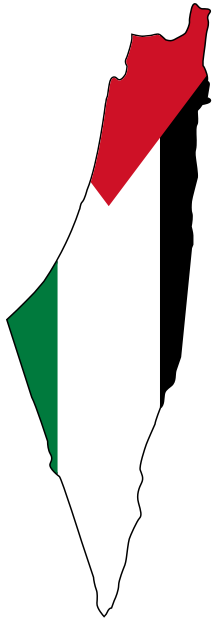
The depopulated village of Artimat Abu al-'Adous / Jabarat / District of Bir-a-Saba (Beer Sheva)
About the depopulated village of Artimat Abu al-'Adous / Jabarat
- District
- Bir-a-Saba (Beer Sheva)
- Date Artimat Abu al-'Adous / Jabarat was occupied
- 19 October 1948
Hover a dot to read the village name, or click to open its card.
Artimat Abu al-'Adous / Jabarat – Palestinian Bedouin Clan of the Beersheba Subdistrict
Artimat Abu al-'Adous, also known as Rteimat Abu al-'Adous, was a Palestinian Bedouin clan belonging to the Jabarat tribe of the Beersheba Subdistrict. It was not a single nucleated village with one fixed built-up center, but a tribal community whose dwellings, encampments, and lands formed part of the wider Jabarat territory in northwestern Beersheba and northeastern Gaza.
The official 1931 Census of Palestine records the clan as Irtimat Abu-l ‘Udus. The Jabarat as a whole occupied areas along both sides of Wadi al-Hasi and toward the lands near Burayr and al-Faluja, in a region where pastoral activity increasingly overlapped with settled agriculture.
- District
- Beersheba
- Tribe
- Jabarat
- Type of Community
- Bedouin and semi-settled clan with multiple encampments and land areas rather than one nucleated village
- Population in 1922
- No independently verified separate figure was established from the official sources used
- Population in 1931
- 546 – official Census of Palestine
- Estimated Population in 1948
- 1,111 according to Salman Abu Sitta's Register – a later estimate, not an official census
- Attack and Displacement Period
- Jabarat groups were attacked on 16–17 July; a principal attack is recorded on 6 October; Abu Sitta records Abu al-'Adous as depopulated on 19 October 1948
- Military Operation
- Operation Yoav in the final recorded phase of displacement
- Military Unit
- No specific brigade or battalion is independently documented at the Artimat Abu al-'Adous level
- Land Area
- No independent clan-specific total; Abu Sitta gives 379,175 dunums for the Jabarat as a whole
- Settlements on Clan Land
- No particular Israeli settlement can be reliably assigned to Abu al-'Adous land without a clan-level cadastral map
The Name Artimat Abu al-'Adous
The name appears in Palestinian sources in several forms, including Artimat Abu al-'Adous and Rteimat Abu al-'Adous. The official 1931 census transliterated it as Irtimat Abu-l ‘Udus.
“Artimat / Rteimat” refers to a wider tribal grouping that Palestinian tribal sources divide into Artimat Abu al-'Adous and Artimat al-Fuqara.
The two should not be confused: each was separately recorded among the Jabarat and had its own population and internal subdivisions.
Competing Traditions of Origin
Tribal sources differ over the more distant origin of the Rteimat.
'Umar Rida Kahhala, citing 'Arif al-'Arif, states that the Rteimat originated from 'Uqayl, once lived in Bahrain, and later divided into Artimat Abu al-'Adous and Artimat al-Fuqara.
Later Palestinian tribal accounts instead associate Abu al-'Adous with Shammar and describe kinship and a shared migration tradition with the Ramadin.
Neither genealogy is therefore adopted here as conclusively established fact; both are presented as competing tribal traditions.
Artimat Abu al-'Adous within the Jabarat
Artimat Abu al-'Adous was one of thirteen major Jabarat clans recorded in Mandate-period Palestinian tribal documentation.
The wider Jabarat domain lay northeast of Gaza and northwest of Beersheba and extended along Wadi al-Hasi toward the areas near Burayr and al-Faluja.
Jabarat-wide population and land figures should not be presented as statistics belonging exclusively to Artimat Abu al-'Adous.
Clan Leadership
Khalid 'Awad's documentation of the Beersheba tribes identifies the Mandate-period shaykh of Artimat Abu al-'Adous as:
Nimr bin Hamad bin Muslim bin Salim Abu al-'Adous.
Later family accounts record other Abu al-'Adous shaykhs at different periods, but Nimr Abu al-'Adous is the figure specifically identified in documentation of the Jabarat leadership before the Nakba.
Subdivisions
'Arif al-'Arif, as reproduced by 'Umar Rida Kahhala, lists the following branches:
- al-Sawayha.
- al-Zuyud.
- al-Hallaf.
- 'A'id.
- al-Rajifi / al-Rawajfa.
- al-Zurayqat.
Later tribal sources provide more detailed internal genealogies and sometimes additional names. The list above follows the earlier historical source.
Population in 1931
The official 1931 Census of Palestine separately enumerated Artimat Abu al-'Adous within the Jabarat.
| Total | 546 |
|---|---|
| Category | Number |
| Males | 309 |
| Females | 237 |
All were recorded as Muslims.
The census does not give an occupied-house figure for the clan, which is consistent with the special non-synchronous enumeration used for Beersheba's Bedouin population.
Households in 'Arif al-'Arif's Account
'Arif al-'Arif describes Artimat Abu al-'Adous as numbering approximately 111 “houses” and 546 people.
His population figure matches the official 1931 census total.
In the Bedouin context, however, “house” should be understood as a household, family unit, or tent group rather than necessarily a permanent masonry house in a compact village.
Estimated Population in 1948
Salman Abu Sitta's updated Register gives an estimated 1,111 people for Abu al-'Adous / Irteimat / Jbarat in 1948.
This is a retrospective estimate rather than an official 1948 census.
Some modern Palestinian databases display a figure of 230, but the updated Abu Sitta table shows that 230 belongs to Abu Rawwa' / Jabarat, while Abu al-'Adous is listed with 1,111.
| Period | Figure | Nature of Figure |
|---|---|---|
| 1931 | 546 | Official Census of Palestine |
| 1948 | 1,111 | Later estimate in Salman Abu Sitta's Register |
| 1998 | 4,026 registered refugees | Refugee-record figure used by Abu Sitta |
| 1998 | 6,822 refugees and descendants | Later total estimate in Abu Sitta's Register |
Encampments and Land
The 1945 Village Statistics do not provide an independent Artimat Abu al-'Adous land unit from which a standard village ownership and land-use table can be reconstructed.
Later tribal documentation associates Abu al-'Adous with localities and land-names including:
- al-Sukkariyya.
- Tur al-Habur.
- Umm Mutayra.
- Umm Nafsiya.
- Umm Matawi'.
- al-Sath.
These local names are not accompanied by independently verified cadastral boundaries or official acreage figures in the source and are therefore not converted into a numerical ownership table.
Jabarat Tribal Land versus Abu al-'Adous Land
Salman Abu Sitta's Register gives approximately 379,175 dunums for the Jabarat as a whole.
Other Palestinian tribal sources describe approximately 38,000 habal, or about 60,000 dunums, in the Jabarat zone northeast of Gaza near Burayr and al-Faluja.
The two figures evidently represent different definitions or geographical scopes and should not be merged.
More importantly, neither can be treated as an independently documented land total for Artimat Abu al-'Adous alone.
Economic Life
The Jabarat combined livestock raising and pastoralism with cultivation, particularly as some of their communities became increasingly settled near the agricultural villages of the northern Naqab and southern coastal plain.
Artimat Abu al-'Adous raised livestock and cultivated land within their tribal domain.
No independent 1945 agricultural table exists for the clan, so cereal, orchard, or livestock figures belonging to the Jabarat as a whole are not reassigned to Abu al-'Adous.
Water, Education, and Services
Jabarat encampments were linked to Wadi al-Hasi and local wells and water resources across the northern Naqab and southern coastal plain.
The principal sources reviewed do not provide a comprehensive Abu al-'Adous-specific list of wells.
Nor is an independent school serving the entire clan documented, so schools in Burayr, al-Faluja, or Beersheba are not automatically described as Abu al-'Adous institutions.
The July 1948 Attack
Salman Abu Sitta's Register indicates that pressure on the Jabarat did not begin only in October. Jabarat communities were attacked on 16–17 July 1948.
This explains why 17 July appears as an “occupation date” in some later Palestinian databases.
The updated Register, however, does not use this date as the final displacement date of Artimat Abu al-'Adous, for whom it records a later date of 19 October.
The Main October Attack
Notes spread across the Jabarat entries in Abu Sitta's Register state that the principal attack occurred on 6 October 1948 and ultimately culminated in Operation Yoav.
6 October predates the formal opening of Operation Yoav by nine days, so the beginning of the intensified attack on the Jabarat should be distinguished from the operation's official start date of 15 October.
Displacement during Operation Yoav
Salman Abu Sitta records 19 October 1948 as the depopulation date for Abu al-'Adous / Irteimat / Jbarat.
This fell during Operation Yoav, which lasted from 15 October to 4 November 1948.
The operation aimed to break Egyptian lines in southern Palestine and connect Israeli forces in the Naqab with those farther north. The Giv'ati, Yiftach, Negev, and Har'el brigades participated at the operation-wide level.
Neither Abu Sitta's clan entry nor PalQuest, however, identifies one particular brigade as the unit that directly displaced Artimat Abu al-'Adous.
Occupation and Displacement Chronology
- Until 1948
Pre-Nakba Encampments
Artimat Abu al-'Adous lived within the broad Jabarat domain in northwestern Beersheba and northeastern Gaza.
- 16–17 July 1948
Summer Attacks on the Jabarat
Abu Sitta records attacks on Jabarat communities during this period; it is not the final Abu al-'Adous depopulation date.
- 6 October 1948
Main Attack on the Jabarat Area
Abu Sitta's notes indicate a main attack beginning during this phase and later culminating in Operation Yoav.
- 15 October 1948
Formal Opening of Operation Yoav
A major Israeli offensive began against Egyptian lines in southern Palestine.
- 19 October 1948
Recorded Displacement of Artimat Abu al-'Adous
This is the depopulation date given in Salman Abu Sitta's Register.
- 21 October 1948
Occupation of Beersheba
The fall of the subdistrict's principal administrative center further transformed Bedouin mobility and control of tribal territory.
- 4 November 1948
End of Operation Yoav
The operation had substantially altered military control across southern Palestine.
Military Operation and Unit
Military Operation: Operation Yoav is the operation associated in Salman Abu Sitta's Register with the recorded 19 October 1948 displacement of Artimat Abu al-'Adous.
Military Unit: No specific brigade or battalion is independently documented at the clan level.
The Giv'ati, Yiftach, Negev, and Har'el brigades took part in Operation Yoav on different axes, but none should be assigned specifically to Artimat Abu al-'Adous without direct clan-level evidence.
Cause of Displacement
Abu Sitta's chronology indicates a multi-stage military process: attacks in July, a renewed principal attack in October, and final recorded displacement during Operation Yoav.
The most supportable description is therefore military attack and wartime displacement during the southern campaign, rather than migration unrelated to the fighting.
Destruction of Encampments
There was no single compact masonry village called Artimat Abu al-'Adous for which a reliable destruction percentage can be calculated.
The clan occupied multiple encampments and land areas, and the reviewed sources do not provide a comprehensive inventory of houses, tents, wells, or other structures destroyed at each site.
No unsupported description such as “completely destroyed” or numerical destruction percentage is therefore used.
Settlements on Artimat Abu al-'Adous Land
The reviewed sources do not provide a separate cadastral map of Artimat Abu al-'Adous land from which a particular Israeli settlement can conclusively be assigned to the clan's property alone.
The broader Jabarat domain was extensive and internally divided among numerous clans. Proximity to the historical Jabarat region is therefore insufficient to establish that a modern settlement stands specifically on Abu al-'Adous land.
Artimat Abu al-'Adous Today
Following the Nakba, members of Artimat Abu al-'Adous were dispersed outside their historic encampments, while Abu al-'Adous and Rteimat continued as tribal and family names.
A modern community entry in the Encyclopedia of Palestinian Villages states that many Abu al-'Adous families live in Jordan, particularly in Zarqa, 'Ayn al-Basha, and Madaba. This is community-sourced information rather than an official contemporary census.
There is no single former “Artimat Abu al-'Adous village site” because the clan was historically distributed across multiple encampments and land areas.
A precise reconstruction of its present-day historical landscape would require matching local place-names such as al-Sukkariyya, Tur al-Habur, Umm Mutayra, Umm Nafsiya, Umm Matawi', and al-Sath with cadastral and tribal-boundary maps. This section is not a comprehensive 2026 field survey.
Sources
- Government of Palestine – Census of Palestine, 1931: Irtimat Abu-l ‘Udus / Jabarat
- 'Arif al-'Arif – Tarikh Bir al-Saba' wa-Qaba'iliha
- 'Umar Rida Kahhala – Mu'jam Qaba'il al-'Arab: Artimat Abu al-'Adous
- 'Umar Rida Kahhala – Mu'jam Qaba'il al-'Arab: the Rteimat and their divisions
- Encyclopedia of Palestinian Villages – Artimat Abu al-'Adous
- Encyclopedia of Palestinian Villages – Jabarat and Abu al-'Adous
- Salman Abu Sitta – Register of Depopulated Palestinian Localities: Abu Al Udous / Irteimat / Jbarat
- PalQuest – Interactive Encyclopedia of the Palestine Question: Operation Yoav
Photos from the village's people
Photos sent in by visitors and published after review.
Add a photo of this village
Log in to add photos of this village.
Other villages from Bir-a-Saba (Beer Sheva)
More from the archive
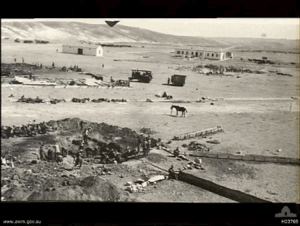 Bir-a-Saba (Beer Sheva)
The depopulated village of Asluj / District of Bir-a-Saba (Beer Sheva)
Bir-a-Saba (Beer Sheva)The depopulated village of Dhulam Abu Juwayid / Tayaha / District of Bir-a-Saba (Beer Sheva)
Bir-a-Saba (Beer Sheva)The depopulated village of Sawakhneh / al-Azazmeh / District of Bir-a-Saba (Beer Sheva)
 Download Our Palestine App
The whole archive in the palm of your hand: depopulated villages, the Nakba, the massacres and Al-Aqsa — free, with no ads to erase the story.
Download Our Palestine App
The whole archive in the palm of your hand: depopulated villages, the Nakba, the massacres and Al-Aqsa — free, with no ads to erase the story.
Comments
No comments yet — be the first to write one.
Add your comment
Name and email are optional. Comments appear after review.