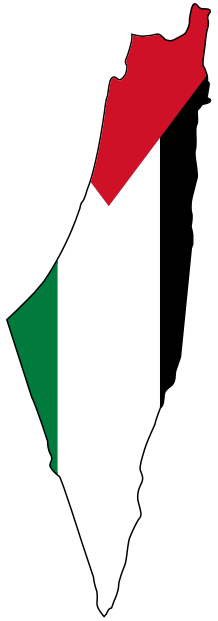
The depopulated village of Qatra / District of Ramla
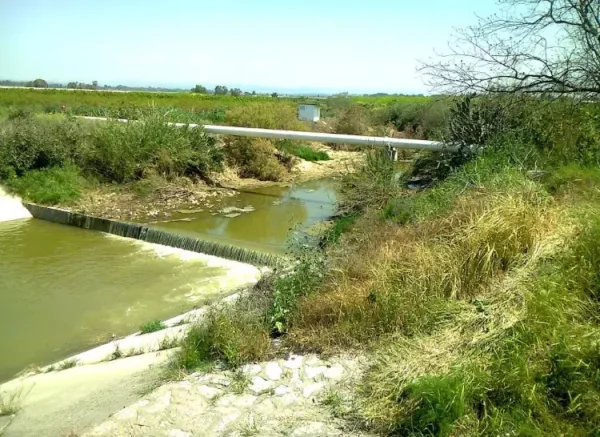
About the depopulated village of Qatra
- District
- Ramla
- Date Qatra was occupied
- 06 May 1948
- Population in 1948
- 1,404
- Brigade that carried it out
- Givati Brigade
- Distance from the governorate centre
- 15 km southwest of Ramla
- Elevation above sea level
- 50 m
- Cause of displacement
- Expulsion by Zionist forces: within a few days of entering the village, the Haganah either intimidated the remaining villagers into leaving or ordered them to leave
- Extent of destruction
- Qatra was mostly destroyed with the exception of its school and few houses remain standing to this date.
- Ethnic cleansing
- Qatra inhabitants were completely ethnically cleansed.
- Settlements built on the land of Qatra before 1948
- Gedera (established in 1884 just south of the village site; many of its buildings are now on village land)
- Settlements built on the built-up area of Qatra after 1948
- Qidron (built on village land in 1949)
Hover a dot to read the village name, or click to open its card.
Borders of the depopulated village of Qatra
Qatra (Qatrat Islam): A Depopulated Palestinian Village in the Ramla District
Qatra, also known during the British Mandate as Qatrat Islam, was a Palestinian village in the Ramla District. It stood approximately 15 km southwest of Ramla on a limestone rise in the central coastal plain, at an average elevation of about 50 metres above sea level. Zionist forces occupied the village during the Nakba and the occupation of Palestine in 1948, and its inhabitants were displaced after units of the Giv'ati Brigade entered the village in May 1948.
- Subdistrict
- Ramla
- Distance from district center
- 15 km southwest of Ramla
- Average Elevation
- 50 m above sea level
- Population in 1931
- 822
- Number of Houses in 1931
- 175
- Population in 1944/1945
- 1,210
- Estimated Population in 1948
- About 1,404 – a later demographic estimate, not an official census
- Total Land Area in 1945
- 7,853 dunams
- Attack and Depopulation
- Units of the Giv'ati Brigade surrounded the village on 6 May 1948 and demanded that the villagers hand over all their weapons, then moved into it even though the villagers had handed over several rifles; the soldiers looted the village, the Haganah arrested several villagers and, within a few days, either intimidated the rest of the villagers into leaving or ordered them to leave, according to Israeli historian Benny Morris as cited by Khalidi.
- Final Israeli Control
- 6 May 1948, when units of the Giv'ati Brigade surrounded the village and then moved into it, according to Benny Morris as cited by Khalidi; the official Haganah account agrees that the village was occupied around this time
- Military Unit
- The Giv'ati Brigade, according to Benny Morris as cited by Khalidi; the official Haganah account attributes the occupation to the Alexandroni Brigade, probably erroneously, according to Khalidi
- Cause of Depopulation
- Expulsion by Zionist forces: within a few days of entering the village, the Haganah either intimidated the remaining villagers into leaving or ordered them to leave
- Settlements Documented on Village Lands
- Gedera, established by Zionists in 1884 just south of the village site, now a town many of whose buildings are on village land; and Qidron, built on village land in 1949
Location of Qatra
Qatra stood on a limestone rise in the central coastal plain, approximately one kilometre south of Wadi al-Sarar.
The village was about 15 km southwest of Ramla and stood at an average elevation of approximately 50 metres above sea level.
A spur road linked it with the main highway leading to Ramla and other urban centres, while secondary roads connected it with several neighbouring Palestinian villages.
Name and History of Qatra
During the British Mandate, the village was also referred to as Qatrat Islam in order to distinguish it from Qatrat Yahud, the adjacent Jewish fort.
Walid Khalidi identifies the site of Qatra with the Hellenistic town of Kidron, also known as Cedron or Gedrus. During the Roman period, Kidron fell within the administrative jurisdiction associated with Azotus Hippenus, or Isdud, and appears to have been a substantial town by the fourth century CE.
Relatively little is known about the site during the early Islamic period.
In 1596, Qatra was a village in the nahiya of Gaza within the liwa of Gaza, with an estimated population of approximately 336. Its inhabitants paid taxes on wheat, barley, sesame, fruit, goats, and beehives.
Edward Robinson visited Qatra in 1852 and described it as a village of considerable size. In the late nineteenth century it was described as an adobe-built village surrounded by gardens.
Architecture and Services in Qatra
During the Mandate period, Qatra had a rectangular layout. Its houses were constructed either of adobe brick or cement.
A mosque and several shops stood near the centre of the village, while orchards and cultivated fields surrounded the built-up area.
Most of Qatra's inhabitants were Muslim.
As new houses were constructed on former agricultural land during the Mandate, the built-up area expanded toward the southeast.
Education in Qatra
A coeducational elementary school was established in Qatra in 1923.
By the mid-1940s, the school enrolled 123 boys and 8 girls, for a total of 131 pupils.
Economic Life in Qatra
Agriculture was the villagers' principal source of livelihood, supported by fertile soil and abundant groundwater.
Residents cultivated cereals, vegetables, and fruit. Some agriculture was rainfed, while other crops were irrigated from artesian wells.
Orchards and cultivated fields surrounded the village on all sides.
In 1944/45, 391 dunums of Palestinian land were devoted to citrus and bananas, 4,320 dunums to cereals, and 215 dunums were irrigated or used for plantations. Thirty dunums within the latter category were planted with olive trees.
Land Ownership in Qatra
The total registered land area of Qatra was 7,853 dunums in the 1944/45 statistics.
Land ownership in Qatra, 1944/45, using the terminology of Palestine Remembered
- Palestinian5,130 dunums65%
- Transferred to Zionists2,509 dunums32%
- Communal214 dunums3%
The land recorded as “Transferred to Zionists” represented approximately 32 percent of Qatra's total registered lands.
Land Use in Qatra, 1944/45
Land use in Qatra, separating ownership categories according to PalQuest's detailed data
- Palestinian
- Transferred to Zionists
- Communal/Public
- Citrus and bananas795 dunums
- Plantations and irrigable land588 dunums
- Cereals5,959 dunums
- Built-up area26 dunums
- Non-cultivable land485 dunums
A total of 7,342 dunums, approximately 93 percent of the village lands, was cultivated or cultivable: 4,926 Palestinian dunums and 2,416 dunums in the category “Transferred to Zionists.”
Built-up and non-cultivable land together amounted to 511 dunums, or about 7 percent of the total.
Palestine Remembered places 392 dunums of non-arable land in its Palestinian column. PalQuest's detailed table shows that this combines 178 Arab dunums with 214 public dunums. The communal/public category is therefore separated here.
Population of Qatra
Population of Qatra in selected years
- 1596336Estimate derived from Ottoman tax records
- 1922640Official British Mandate census
- 1931822Official British Mandate census
- 1944/451,210Official statistics
- 19481,404Later estimate published by Palestine Remembered
- Estimated refugees in 19988,620Later estimate published by Palestine Remembered
Number of Houses in Qatra
Number of houses in Qatra
- 1931175Official British Mandate census figure
- 1948298Later estimate published by Palestine Remembered
Archaeological Remains in Qatra
Modern Qatra was built over a Roman and Byzantine site. Mosaic floors, building foundations, and pottery fragments provided evidence of earlier settlement.
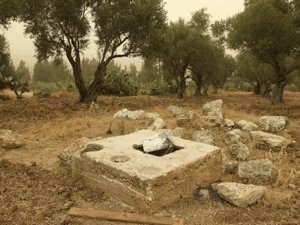
Palestine Remembered also records an archaeological locality northwest of the village known as al-Nabi Arafat, containing stone foundations, cisterns, a well, and pottery fragments, as well as a mound known as Tall al-Ghul.
These additional local details are attributed specifically to Palestine Remembered, while Khalidi's PalQuest entry documents the Roman and Byzantine remains at the village site itself.
Attacks on Qatra before its Occupation
The earliest reported Haganah military activity at Qatra occurred on 13 March 1948. According to the Palestinian newspaper Filastin, Arab workers picking fruit in an orchard came under fire and five were wounded.
On 17 April 1948, after the British evacuated the police fortress at Qatra, Haganah squads moved into the position.
The seizure of the police fortress therefore preceded the encirclement and entry into Qatra village itself in May.
Occupation and Depopulation of Qatra during the Nakba
On 6 May 1948, units of the Giv'ati Brigade surrounded Qatra and demanded that the villagers surrender all of their weapons.
Walid Khalidi cites Israeli historian Benny Morris as stating that several dozen armed villagers attempted to break out but were stopped by the Haganah. After villagers handed over several rifles, Giv'ati troops entered the village and soldiers began looting property.
During these events, one villager shot and killed a soldier, after which the Haganah arrested a number of village residents.
Khalidi's cited account states that within the following days the remaining population was either intimidated into leaving or ordered to depart.
The official Haganah account agrees that Qatra was occupied at approximately the same time but attributes the capture to the Alexandroni Brigade. Khalidi considers that attribution probably erroneous.
The Israeli sources cited above are not used independently in this article; they are included only because they are reproduced and assessed in the approved Palestinian reference.
There is a discrepancy concerning the precise occupation date. Khalidi's detailed PalQuest narrative places Giv'ati's entry into Qatra on 6 May and the displacement of the remaining inhabitants within the following days, while Palestine Remembered's statistical summary lists 17 May 1948 as the occupation date.
- Encirclement and entry into the village: 6 May 1948.
- Attacking unit favored by Khalidi's detailed account: Giv'ati Brigade.
- Unit named in the official Haganah account: Alexandroni Brigade, an attribution Khalidi considers probably erroneous.
- Occupation date listed by Palestine Remembered: 17 May 1948.
- Fate of the inhabitants: some residents were arrested, while the remaining population was intimidated into leaving or ordered to depart in the days following the occupation.
- Fate of the village: most of its built-up area was later destroyed, while the school and a few houses survived.
Occupation and Depopulation Chronology
- 13 March 1948
First reported Haganah military activity at Qatra
The Palestinian newspaper Filastin reported a shooting incident involving Arab fruit-pickers working in an orchard that left five workers wounded; according to Khalidi, this is the earliest report of Haganah military activity at Qatra.
- 17 April 1948
Haganah moves into the Qatra police fortress
Haganah squads moved into the police fortress at Qatra after its evacuation by the British, according to a New York Times story cited by Khalidi.
- 6 May 1948
Final occupation
Units of the Giv'ati Brigade surrounded the village and demanded that the villagers hand over all their weapons; the Haganah stopped several dozen armed men from breaking out, and the Giv'ati troops then moved into the village even though the villagers had handed over several rifles, according to Benny Morris as cited by Khalidi. The official Haganah account agrees that Qatra was occupied around this time but cites the Alexandroni Brigade as the occupying force, probably erroneously according to Khalidi.
- May 1948 (after the troops entered the village)
Looting of the village and arrest of villagers
The soldiers began looting the village and one of them was shot dead by a villager, after which the Haganah arrested several villagers, according to Benny Morris as cited by Khalidi.
- May 1948 (within a few days of the troops entering the village)
Expulsion of the remaining inhabitants
According to Benny Morris as cited by Khalidi, the Haganah, “within a few days, either intimidated the rest of the villagers into leaving or ordered them to leave.”
- 1949
Settlement on village lands
The settlement of Qidron was built on village land; Gedera, established by Zionists in 1884 just south of the village site, had become a town, many of whose buildings are on village land.
Settlements Established on the Lands of Qatra
Two Zionist/Israeli settlements are particularly associated with Qatra's lands, but their foundation dates must be distinguished:
- Gedera: established by Zionists in 1884 immediately south of the village site, decades before the Nakba. Khalidi states that many of the town's buildings later stood on Qatra's lands.
- Qidron: established in 1949 on Qatra's village lands after the displacement of its Palestinian inhabitants.
Accordingly, the claim that Gedera was established in 1948 is incorrect; its foundation dates to 1884.
Qatra Today
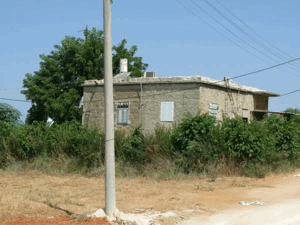
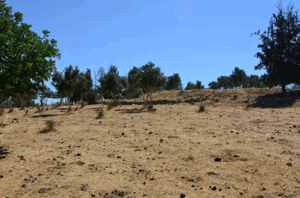
According to the field description published by Walid Khalidi in All That Remains, the village school and a few deserted houses remained at the site. Cactus plants grew there, together with a number of palm trees.
The surrounding village lands were being cultivated.
Palestine Remembered contains later user-contributed photographic documentation of Qatra, including photographs from 2009 and 2012 showing the school, police station, surviving houses, village lands, and other remains. These contributions, however, do not constitute a comprehensive independent contemporary field survey.
The principal site description therefore relies on Khalidi's historical field research. The approved sources used here do not provide a sufficiently comprehensive and independent recent survey to verify the precise condition of every part of Qatra in 2026.
Sources
Photo gallery


Photos from the village's people
Photos sent in by visitors and published after review.
Add a photo of this village
Log in to add photos of this village.
Other villages from Ramla
More from the archive
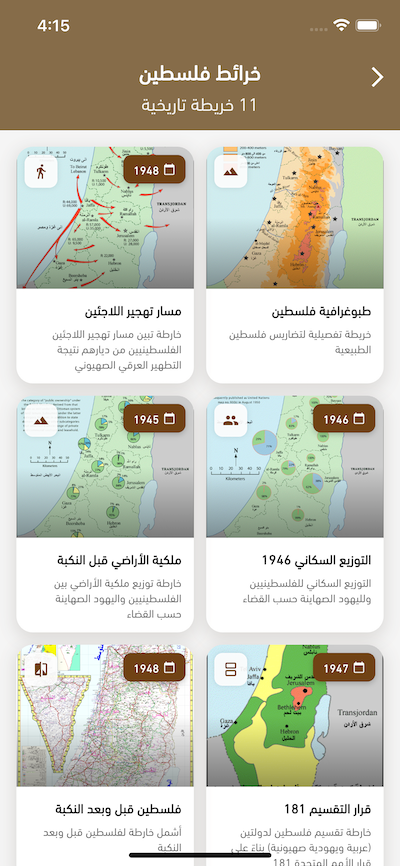
 Download Our Palestine App
The whole archive in the palm of your hand: depopulated villages, the Nakba, the massacres and Al-Aqsa — free, with no ads to erase the story.
Download Our Palestine App
The whole archive in the palm of your hand: depopulated villages, the Nakba, the massacres and Al-Aqsa — free, with no ads to erase the story.

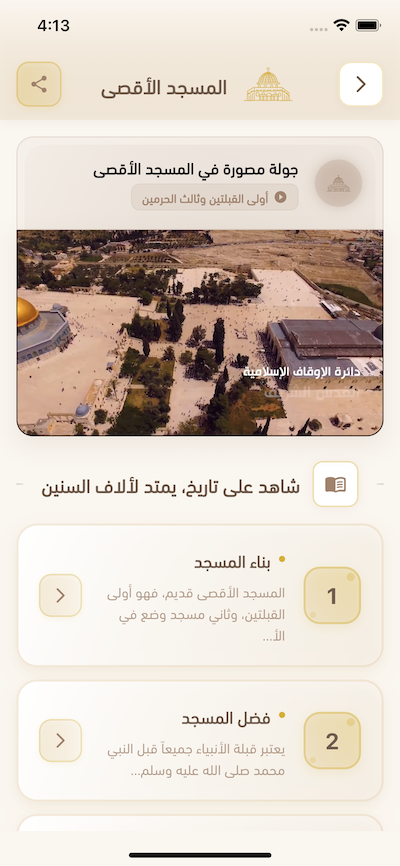
Comments
No comments yet — be the first to write one.
Add your comment
Name and email are optional. Comments appear after review.