
Chaim Weizmann’s 1918 Zionist Commission Mission to Palestine
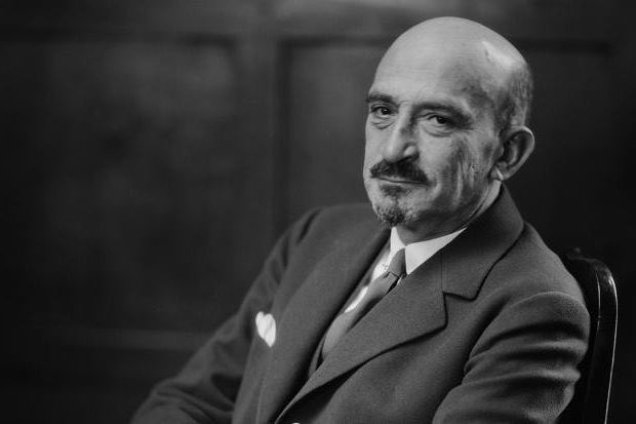
In April 1918, Chaim Weizmann arrived in Palestine at the head of the Zionist Commission, an officially recognized delegation sent with the approval of the British government only months after the Balfour Declaration of November 2, 1917.
The mission represented an important step in translating Britain's political commitment to the Zionist movement into institutional activity on the ground in Palestine. For Palestinians, its arrival demonstrated that the Balfour Declaration was no longer merely a statement issued in London: British military rule was beginning to provide an official framework within which Zionist institutions could operate and expand in Palestine.
Although the 1918 journey is sometimes described as Weizmann's first visit to Palestine, this is historically incorrect. Weizmann had first visited Palestine in 1907. His 1918 journey was significant because he returned not simply as an individual Zionist activist, but as the head of a political commission recognized by the British authorities.
At the time, Britain had not yet completed its conquest of Palestine. Jerusalem and much of southern and central Palestine were under British military occupation, while parts of northern Palestine remained under Ottoman control until September 1918.
Who Was Chaim Weizmann?
Chaim Weizmann was one of the most influential leaders of the Zionist movement during the first half of the twentieth century and played an important role in the diplomatic campaign that preceded the Balfour Declaration.
Born in 1874 in the Russian Empire, Weizmann later settled in Britain, where he became a prominent chemist as well as a leading Zionist political figure. His scientific work during the First World War brought him into closer contact with senior British political circles, while his Zionist activity gave him access to figures including Arthur Balfour and David Lloyd George.
Weizmann became one of the principal advocates pressing Britain to support the Zionist project in Palestine. Decades later, following the establishment of Israel in 1948 and the Palestinian Nakba, he became the first President of Israel in 1949.
The Zionist Commission Arrives in Palestine
Weizmann arrived in Palestine in early April 1918 as chairman of the Zionist Commission for Palestine. The delegation included Zionist representatives from Britain, France, and Italy and was accompanied by British officials who served as liaison officers with the military administration.
The commission must not be confused with the Zion Mule Corps. The Zion Mule Corps was a separate Jewish military transport unit formed under British command in 1915 that served during the Gallipoli campaign and was later disbanded. It was not the delegation that accompanied Weizmann to Palestine in 1918.
The British government had formally authorized the Zionist Commission. Publicly stated tasks included examining the condition of Jewish settlements, organizing relief work, helping repair wartime damage, reopening Jewish institutions, and establishing relations with the country's non-Jewish population.
Behind these immediate tasks lay a broader political purpose connected directly to the Balfour Declaration: the commission was intended to advise the British authorities on matters affecting the establishment of the proposed Jewish national home in Palestine.
Building Zionist Institutions Under British Rule
One of the most important consequences of the mission was the strengthening and reorganization of the Zionist institutional presence in Palestine.
The Zionist movement already maintained a Palestine Office in Jaffa, established before the First World War. Following the arrival of the commission, this institutional apparatus was reorganized into departments dealing with areas such as:
- Land and settlement
- Immigration
- Agriculture
- Finance
- Education
- Statistics and administration
From a Palestinian historical perspective, this development was particularly consequential. It helped create an increasingly organized Zionist institutional structure operating inside Palestine under the protection and political sponsorship of the power occupying the country.
The commission also worked as an intermediary between Zionist institutions and the British military authorities, giving the Zionist movement a level of official access that Palestinian Arabs did not possess through an equivalent representative body.
The Jewish Agency and the Jewish National Fund
The 1918 mission did not itself establish the Jewish National Fund. The fund had already been created in 1901 and was involved in acquiring land for Jewish settlement in Palestine.
Nor was the later Jewish Agency formally founded during Weizmann's visit. Instead, the Zionist Commission became an important stage in the development of the institutional framework that would later perform many of the functions associated with the Jewish Agency.
In 1921, the Zionist Commission was reorganized as the Palestine Zionist Executive. Under the British Mandate, the Zionist Organization was recognized as the Jewish agency envisaged in the Mandate, while the expanded Jewish Agency for Palestine was formally constituted later, in 1929.
Palestinian Reaction to the Commission
The arrival of Weizmann and the Zionist Commission caused growing concern among Palestinians.
Palestinian Arabs were already aware of the Balfour Declaration, but the appearance of an officially recognized Zionist delegation operating alongside the British military administration made the implications of British policy far more tangible.
Even later British investigations acknowledged the importance of this reaction. The Palin Commission, established after the events of 1920, recorded that the arrival of the Zionist Commission had helped bring home to the Arab population the practical implications of the Balfour Declaration.
British inquiries also noted an important imbalance: while the Zionist Commission enjoyed official access to the administration, no comparable body had been created to represent the Palestinian Arab population.
This inequality became an early source of Palestinian resentment toward British rule and reinforced fears that Britain was not administering Palestine simply as an occupying authority, but was actively facilitating a political project whose objectives concerned the future of Palestinian land and sovereignty.
From the Balfour Declaration to a Political Infrastructure
The significance of Weizmann's 1918 mission therefore went far beyond a diplomatic visit.
The Balfour Declaration had expressed British support for the establishment of a Jewish national home in Palestine. The Zionist Commission represented one of the earliest institutional mechanisms through which that commitment began to acquire practical form inside the country.
The commission surveyed conditions, coordinated with British officials, strengthened Zionist organizations, reorganized administrative structures, and helped establish the institutional foundations needed for future immigration, settlement, land acquisition, education, and political organization.
From a Palestinian perspective, this marked a critical transition. A European Zionist movement seeking to transform Palestine was no longer operating only through organizations abroad or under the restrictions of Ottoman rule. It now possessed an officially recognized body working in Palestine with the approval of the British occupying power.
A Turning Point in the Palestinian Experience
The 1918 mission did not immediately create a Jewish state, nor did it instantly transform the demographic reality of Palestine. Its historical importance lies in the political and institutional relationship it helped establish between the Zionist movement and British rule.
In the years that followed, British policy would facilitate large-scale Jewish immigration and recognize Zionist institutions while Palestinian demands for representative government, national independence, and control over immigration and land policy were repeatedly frustrated.
Palestinian resistance to these policies grew accordingly, beginning with political associations and petitions and developing into wider popular opposition to British rule and Zionist settlement.
Seen through Palestinian historical experience, the arrival of the Zionist Commission in 1918 was therefore an early institutional milestone on the road from the Balfour Declaration to the British Mandate and the expansion of the Zionist project in Palestine.
Three decades later, that struggle over land, immigration, sovereignty, and political power culminated in the Nakba of 1948, when the establishment of Israel was accompanied by the mass displacement of Palestinians and the depopulation and destruction of hundreds of Palestinian communities.
More from the archive



 Download Our Palestine App
The whole archive in the palm of your hand: depopulated villages, the Nakba, the massacres and Al-Aqsa — free, with no ads to erase the story.
Download Our Palestine App
The whole archive in the palm of your hand: depopulated villages, the Nakba, the massacres and Al-Aqsa — free, with no ads to erase the story.


Comments
No comments yet — be the first to write one.
Add your comment
Name and email are optional. Comments appear after review.