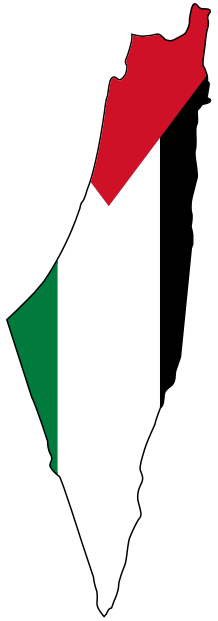
Sabra and Shatila Massacre

The Sabra and Shatila Massacre
The Sabra and Shatila massacre took place between September 16 and 18, 1982, after Israeli occupation forces had occupied West Beirut and surrounded the Sabra area and the Shatila refugee camp. The killings inside the area were carried out primarily by militias from the Lebanese Forces associated with the Kataeb Party, after the Israeli military command allowed them to enter the camps. Palestinian sources also report the participation of elements affiliated with Saad Haddad’s forces and the Guardians of the Cedars, while the Israeli Kahan Commission denied that Saad Haddad’s forces had participated directly in the killings. The Commission itself nevertheless acknowledged indirect Israeli responsibility and held Defense Minister Ariel Sharon personally responsible for disregarding the danger of reprisals and bloodshed and for failing to take the necessary measures to prevent them.
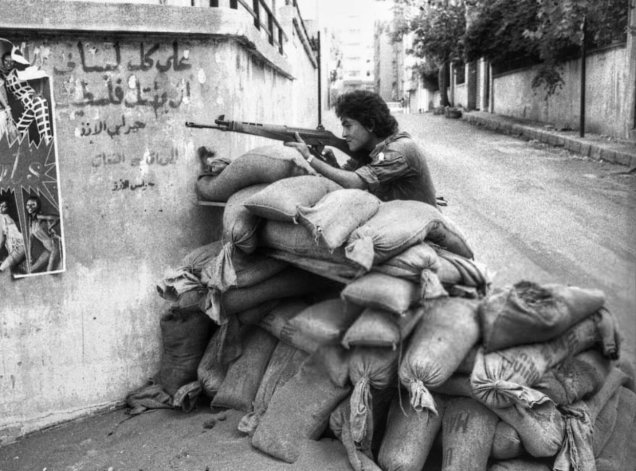
The Sabra and Shatila massacre was not the first massacre suffered by Palestinians, but it became one of the most deeply rooted massacres in Palestinian collective memory. It occurred after the Palestinian resistance had left Beirut, at a time when thousands of Palestinian refugees and Lebanese civilians inside the camps and surrounding areas were left without effective military protection.
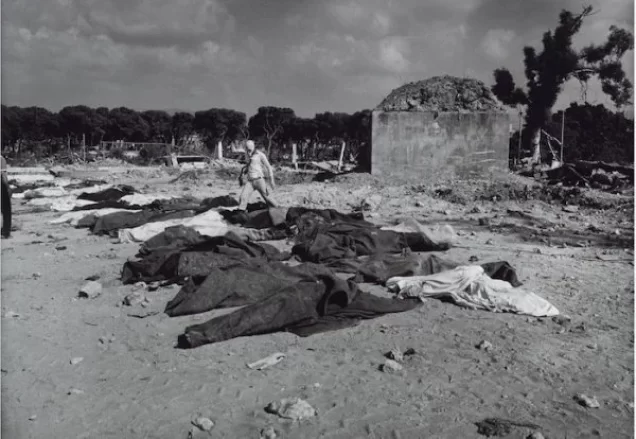
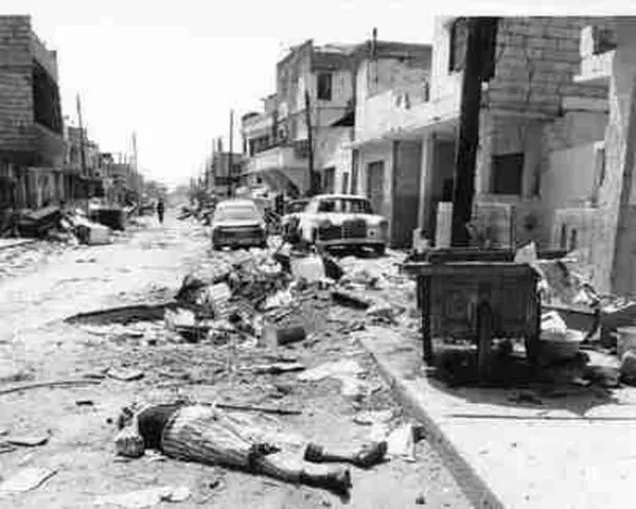
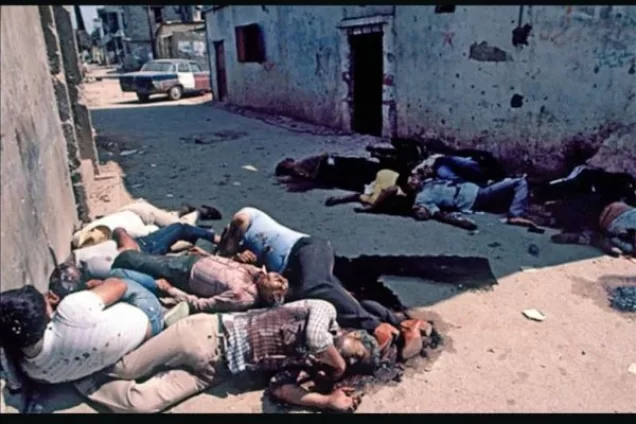
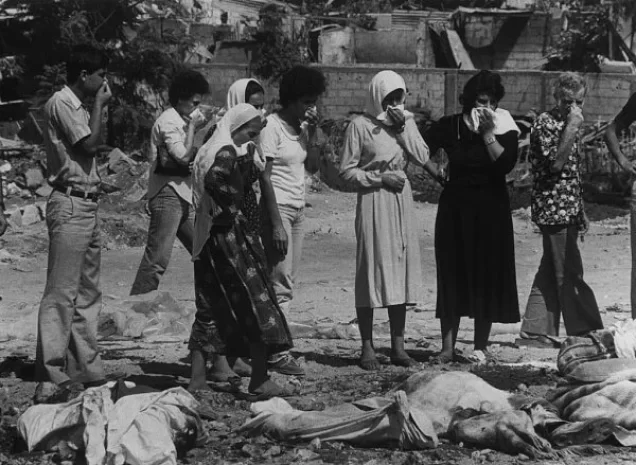
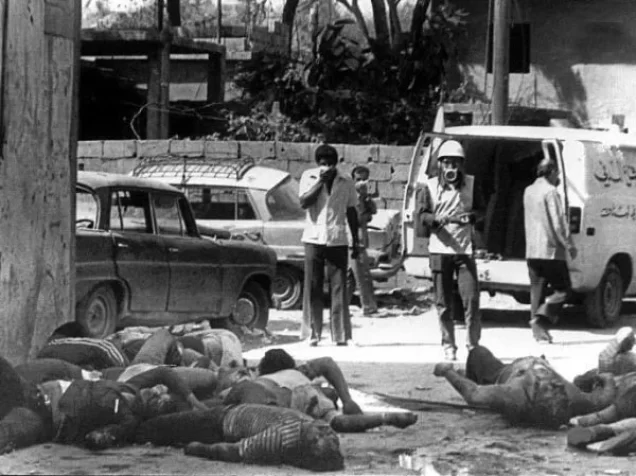
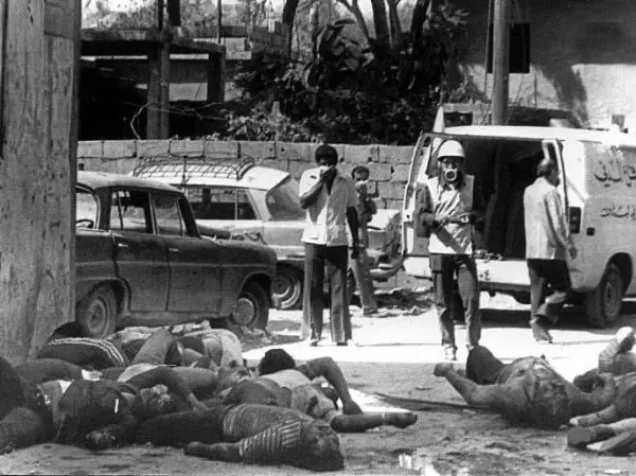
The images of bodies, children, women, and entire families killed inside homes and alleyways, together with the mass graves discovered after the killings ended, remain among the most brutal and enduring images in Palestinian memory of the events of 1982.
The Sabra and Shatila Massacre – Time and Place
The massacre took place in the Sabra area and the Shatila Palestinian refugee camp in southern Beirut. The killings began on the evening of Thursday, September 16, 1982, and continued until Saturday, September 18, 1982.
The killings continued for more than forty hours, while Israeli occupation forces controlled West Beirut and were deployed around Sabra and Shatila and along the roads and entrances leading to them.
When United Nations observers were able to enter the area on September 18, they found groups of bodies of men, women, and children in civilian clothing, some lying together in large groups. Homes were also found destroyed with people still inside them, along with what appeared to be mass graves.
The Sabra and Shatila Massacre – Those Involved and Responsibility
Historically, it is important to distinguish between the forces that directly carried out the killings inside the camps and the role of the Israeli occupation forces that controlled and surrounded the area.
- Lebanese Forces associated with the Kataeb Party: These were the principal forces that entered Sabra and Shatila and carried out the killings. Elie Hobeika was among their most prominent field and security commanders at the time.
- Saad Haddad’s forces and the Guardians of the Cedars: Palestinian sources, including PalQuest and the Institute for Palestine Studies, report the participation of elements from these forces alongside the Lebanese Forces. The Israeli Kahan Commission, however, stated that it had found no evidence that Saad Haddad’s forces participated directly in the killings.
- Israeli occupation forces: They controlled West Beirut, surrounded the camps and their entrances, allowed the Lebanese Forces to enter, and fired illumination flares over the area at night. The Kahan Commission concluded that Israel bore indirect responsibility and held Defense Minister Ariel Sharon personally responsible for disregarding the danger of reprisals and killing and for failing to take sufficient steps to prevent them.
The forces affiliated with Saad Haddad had emerged in southern Lebanon before the 1982 invasion as part of the military split led by Haddad and his close relationship with Israel. This structure later developed into what became known as the South Lebanon Army. After the end of the Israeli occupation of most of southern Lebanon in May 2000, the force collapsed and a large number of its members and their families fled to Israel.
The Sabra and Shatila Massacre – Historical Context
The massacre took place after the Israeli invasion of Lebanon, which began on June 6, 1982, and the advance of Israeli occupation forces toward Beirut, where they imposed a prolonged siege on West Beirut.
During the siege, residential areas, Palestinian refugee camps, and civilian and medical facilities were subjected to repeated aerial, artillery, and naval bombardment. The city also faced severe pressure as access to electricity, water, fuel, food, and medicine was cut off or restricted.
The siege ended with an agreement mediated by U.S. envoy Philip Habib providing for the withdrawal of the forces and leadership of the Palestine Liberation Organization from Beirut.
The evacuation began on August 21 and was completed on September 1, 1982. Palestinian fighters and cadres were dispersed across several Arab countries, while the principal PLO leadership later moved to Tunis.
The withdrawal took place under arrangements and U.S. assurances concerning the safety of Palestinian civilians who would remain in Beirut. One element of the understanding was that Israeli forces would not enter West Beirut after the PLO’s departure.
The evacuation was supervised by a multinational force composed principally of American, French, and Italian troops. These were not United Nations peacekeeping forces, and their units withdrew after the evacuation was completed, only days before the massacre.
On September 14, 1982, Lebanese President-elect Bashir Gemayel, commander of the Lebanese Forces and one of Israel’s most prominent allies in Lebanon, was assassinated in an explosion targeting the Kataeb Party headquarters in Ashrafieh.
The bombing was attributed to Habib Shartouni, a member of the Syrian Social Nationalist Party, who was later convicted in absentia by a Lebanese court.
On the following morning, September 15, Israeli occupation forces entered West Beirut, took control of most of it, surrounded the Palestinian refugee camps, and closed a number of roads and entrances around them.
The Israeli leadership justified allowing the Lebanese Forces to enter Sabra and Shatila by claiming that large numbers of Palestinian fighters remained in the area after the PLO evacuation. Israeli estimates at the time spoke of approximately two thousand or more fighters, but this claim remained highly disputed, particularly after the organized military forces of the PLO had left Beirut under the evacuation agreement.
The Sabra and Shatila Massacre – Course of the Massacre
Beginning on the morning of September 16, Israeli forces intensified their shelling of the Shatila camp area, particularly its southern entrance.
Later that day, the Israeli military command allowed forces from allied Lebanese militias to enter Sabra and Shatila under the pretext of carrying out a search and sweep operation.
Israeli occupation forces had already secured control over the main approaches and entrances around the area and had established command and observation positions close to the camps.
During the night, Israeli forces fired illumination flares over the area, keeping parts of the camps lit while the killings continued inside.
There is insufficient evidence to conclusively establish the widely circulated claim that Ariel Sharon personally stood on the roof of the former Kuwaiti embassy building and directly supervised the killings. However, the presence of Israeli command and observation posts close to the camps, and the fact that the Israeli army surrounded the area during the massacre, are documented.
Over the course of approximately two nights and three days, armed men entered homes and alleyways and killed Palestinian and Lebanese civilians, including women, children, and elderly people.
Firearms and bladed weapons were used, and after the massacre bodies were found inside houses, in alleyways, beneath rubble, and in mass graves.
Testimonies from survivors, journalists, and medical workers described the mutilation of bodies, sexual assaults, the killing of children and entire families, and the abduction of people whose fate in some cases remained unknown.
Witnesses from inside the camp also described extremely brutal scenes involving the mutilated bodies of women and children, severed limbs, and people killed inside their homes or while attempting to escape.
When United Nations observers entered the area on the morning of September 18, they found groups of bodies of men, women, and children in civilian clothing. Some victims appeared to have been killed while attempting to flee, and homes were found blown up with people still inside.
Medical facilities were not spared from the massacre. On September 17, armed militia forces stormed Akka Hospital, and Palestinian sources document the killing of a number of Palestinian doctors, nurses, and patients inside the hospital or after they had been taken from it.
Testimonies also described the abduction of wounded people, medical personnel, and individuals who had sought refuge in the hospital while fleeing the killings.
In the days following the entry of Israeli occupation forces into West Beirut, Israeli forces also seized the contents, archives, and documents of the PLO’s Palestine Research Center, transferring large parts of its library and archival materials to Israel.
The United Nations General Assembly later condemned the seizure of Palestinian cultural heritage and documents and called for their return.
The Sabra and Shatila Massacre – Number of Victims
There is still no single, universally accepted final death toll for the Sabra and Shatila massacre.
Rapid burials, the presence of mass graves, the disappearance of people taken from the area, and bodies remaining beneath rubble made it difficult to determine a definitive number of those killed and missing.
Palestinian researcher Bayan Nuwayhed al-Hout conducted one of the most detailed field studies of the massacre and was able to document 1,390 named cases of people killed or missing.
Other estimates, including Palestinian studies and work by Israeli journalist Amnon Kapeliouk, placed the possible total at approximately 3,000 to 3,500 victims, while PalQuest and the Institute for Palestine Studies cite estimates of no fewer than approximately 3,500 based on their reading of the available sources.
Numerous testimonies also described rape and other forms of sexual violence committed during the massacre.
Israeli Responsibility and the Kahan Commission
The massacre caused widespread shock around the world and also triggered protests inside Israel itself.
On September 25, 1982, a massive demonstration was held in Tel Aviv demanding an investigation into the responsibility of the Israeli government and military.
On September 28, the Israeli government established the Kahan Commission to investigate the events in the camps, chaired by Israeli Supreme Court President Yitzhak Kahan.
The Commission issued its report on February 7, 1983.
The report attributed the direct killings to the Lebanese Forces, but concluded that Israel bore indirect responsibility for the massacre.
It also held Defense Minister Ariel Sharon personally responsible for disregarding the danger of reprisals and bloodshed when the Lebanese Forces were allowed to enter the camps and for failing to take the necessary measures to prevent them.
The Commission recommended that Sharon be removed from the post of defense minister. He left the position in February 1983 but remained in the government in another ministerial role.
The United Nations and the Sabra and Shatila Massacre
On September 19, 1982, immediately after the massacre became known, the United Nations Security Council unanimously adopted Resolution 521.
The Council condemned what it described as the “criminal massacre of Palestinian civilians in Beirut” and stressed the need to protect the civilian population and increase the number of United Nations observers in Beirut.
On December 16, 1982, the United Nations General Assembly adopted Resolution 37/123 D concerning the massacre and described what had occurred at Sabra and Shatila as “an act of genocide.”
It is important to distinguish between this characterization contained in a political resolution adopted by the General Assembly and a criminal judicial judgment issued by a competent international court.
The people of Sabra and Shatila who lost their loved ones were not broken by the massacre... and the children whom their mothers hid in the corners of their homes grew up. Today they reconstruct memory in a broader form, one that knows how to confront the killers and rapists. A memory that will pursue those who violated mothers’ dreams, severed heads, and mutilated bodies. A people of victories, whom the years of the Nakba and the crimes of the occupation and its collaborators could not defeat, will remain faithful to the martyrs...
Testimonies
The following testimonies reflect the individual memories of survivors, journalists, and humanitarian workers associated with the massacre. Some of the details contained in them are personal testimonies attributed to their speakers and are not all findings of an independent judicial investigation.
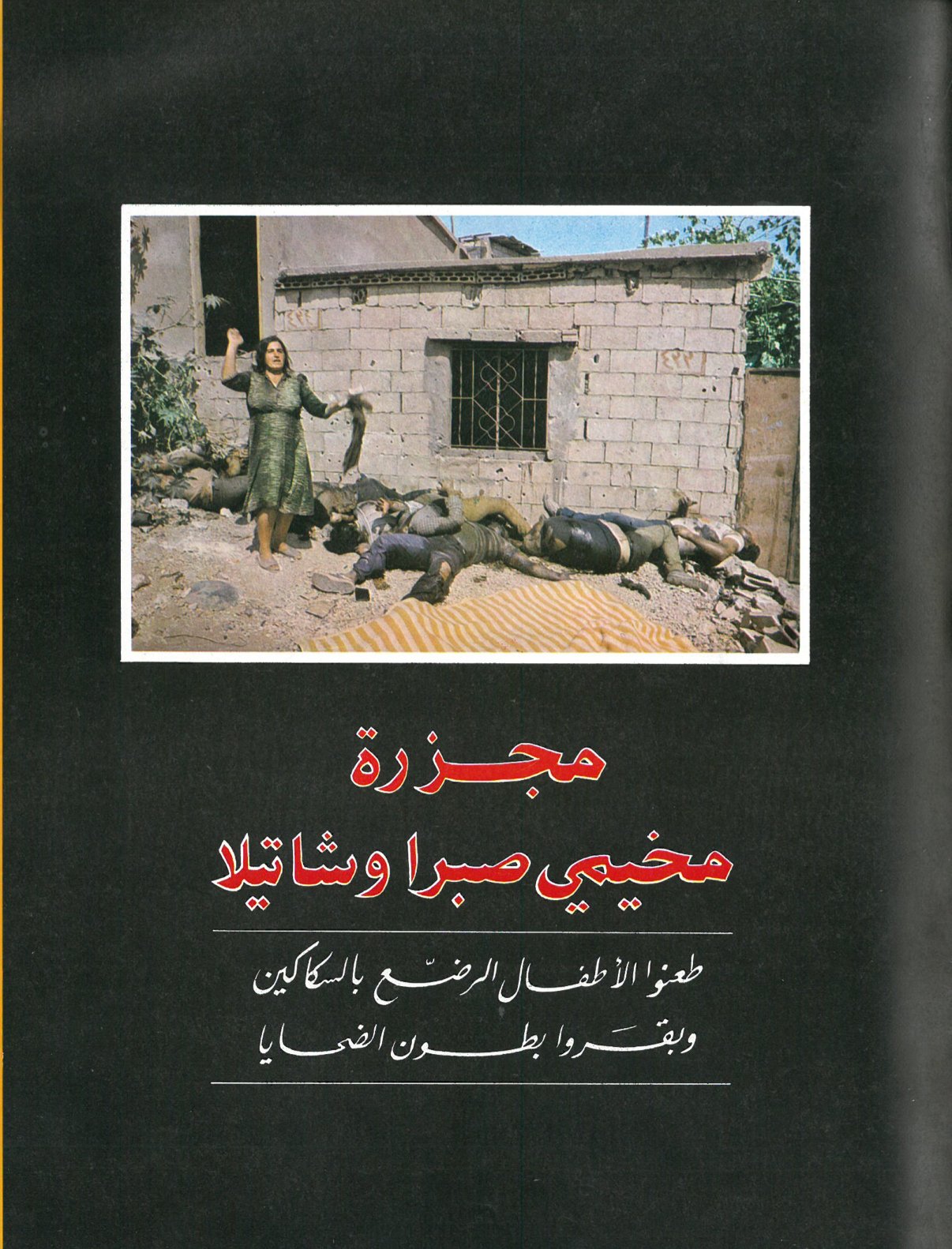
“Israel” had pledged to Philip Habib, the representative of the U.S. government, that it would not enter West Beirut and that it would respect the Palestinian civilians living in the refugee camps. Habib had promised Arafat that nine thousand prisoners in “Israel” would be released... but on Thursday the massacres of Shatila and Sabra began.
Jean Genet – Four Hours in Shatila
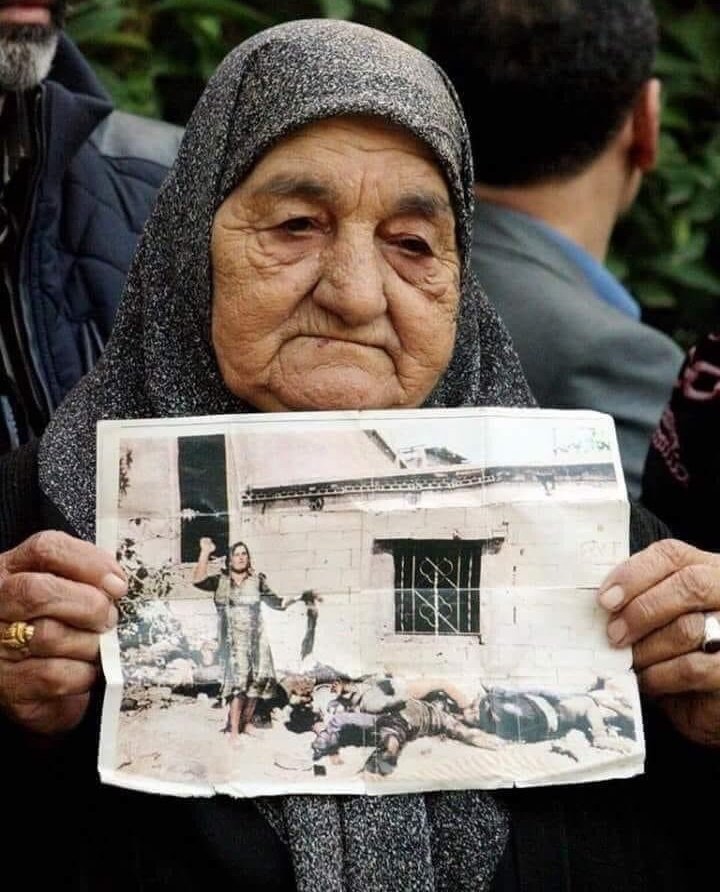
Milana Boutros and the only commemorative photograph of her family return every year to tell the world her story.
The photograph was taken by a journalist and shows her standing beside the bodies of her children and husband, who were killed in the Sabra and Shatila massacre in 1982.
Our dreams fell with the body of that forty-day-old child who was cut open alive in the Sabra and Shatila massacre before my eyes, before they killed him with knives...
Ali al-Hilu, 60 – resident of Shatila refugee camp
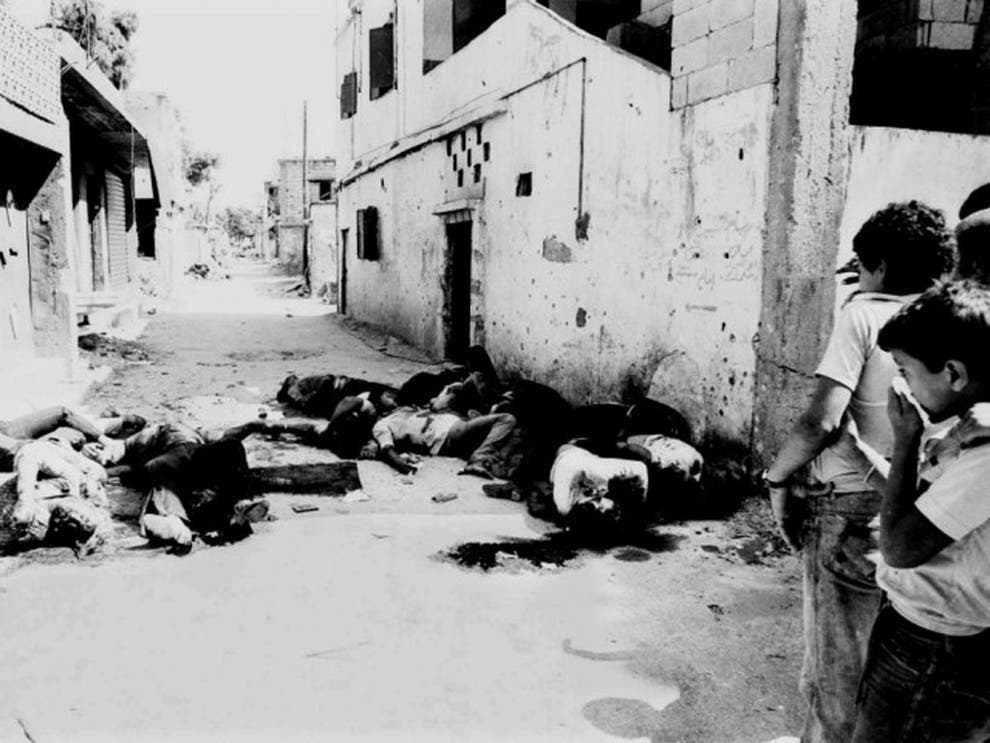
Writing on the anniversary of the Sabra and Shatila massacre in 2012, Robert Fisk said that he could smell injustice every time he visited the place where, according to his estimate, around 1,700 people were killed. He criticized the disparity between the international attention given to the victims of other tragedies and what he saw as the absence of political attention appropriate to the victims of Sabra and Shatila.
It is a sight I will never forget when we entered the camp. Everywhere we turned, we saw bodies in the passageways, on chairs, in front of doors, inside houses. It was indescribable — “to the right, to the left” — near the vegetable cart.
At four in the afternoon, anyone who remained unidentified, we would bury... We continued working for a week...
Every day we buried large numbers. How can one imagine an entire area planted with bodies?
Mohammad Hashem from the town of Naqoura – official with the Lebanese Red Cross
Palestinian poet Rehab Kanaan lost dozens of members of her family in the Sabra and Shatila massacre and was separated from her daughter, with each believing that the other had been killed. Years later, Rehab appeared on a satellite television channel to recite her poetry. Someone who had known the family recognized her, beginning a chain of events that eventually reunited the mother with her daughter.
The Historical Legacy of the Sabra and Shatila Massacre
The Sabra and Shatila massacre became one of the most painful episodes in modern Palestinian history and one of the most prominent tragedies suffered by Palestinians in exile after the Nakba.
The massacre occurred at a moment when the organized military presence of the PLO had been removed from Beirut, while tens of thousands of Palestinian refugees and Lebanese civilians remained in the city and its camps, relying on the international assurances that had accompanied the evacuation process.
From a Palestinian historical perspective, Sabra and Shatila cannot be separated from the broader context of the Nakba, refugeehood, displacement, the wars that targeted Palestinian communities outside Palestine, and the Israeli invasion of Lebanon in 1982.
The massacre also became a historical example of the responsibility of a military power exercising control over an area to protect the civilian population, and of the dangers of allowing an allied armed force to enter a civilian area under circumstances in which reprisals and mass killing could reasonably have been anticipated.
More than four decades later, Sabra and Shatila remain present in Palestinian, Lebanese, and international memory not only because of the number of victims, but also because of the circumstances that preceded their deaths: the siege of Beirut, the departure of the Palestinian resistance, the assurances concerning the protection of civilians, and then the entry of the militias into the camps while they were surrounded by Israeli occupation forces.
Video clips
Photo gallery








More from the archive
 Download Our Palestine App
The whole archive in the palm of your hand: depopulated villages, the Nakba, the massacres and Al-Aqsa — free, with no ads to erase the story.
Download Our Palestine App
The whole archive in the palm of your hand: depopulated villages, the Nakba, the massacres and Al-Aqsa — free, with no ads to erase the story.

Comments
No comments yet — be the first to write one.
Add your comment
Name and email are optional. Comments appear after review.