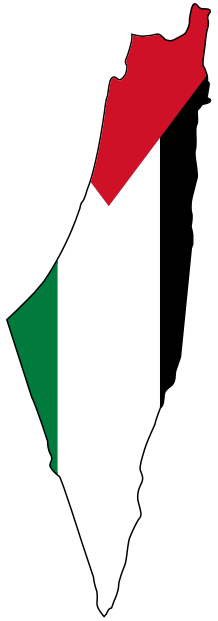
International Day of Solidarity with the Palestinian People
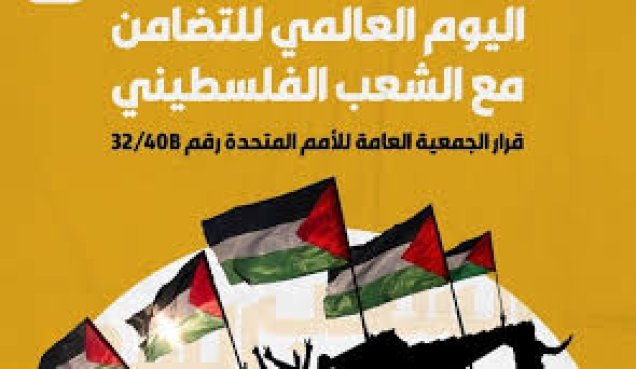
Every year on or around November 29, the United Nations observes the International Day of Solidarity with the Palestinian People.
The observance was established by the United Nations General Assembly through Resolution 32/40 B of December 2, 1977, which called for the annual commemoration to begin in 1978.
The date was deliberately chosen because of its historical significance to Palestine.
On November 29, 1947, the General Assembly adopted Resolution 181 (II), commonly known as the Partition Resolution, which proposed dividing Mandatory Palestine into an Arab state and a Jewish state, while placing Jerusalem under a special international regime.
Of the two states envisaged in Resolution 181, only Israel came into existence. The Palestinian Arab state envisioned by the resolution was never established.
For Palestinians, November 29 consequently carries a profound historical contradiction: it recalls an international decision to partition their homeland while also serving, three decades later, as the date chosen by the United Nations to reaffirm solidarity with their still-unfulfilled national rights.
Why November 29?
The United Nations officially explains that November 29 was selected because of the “meaning and significance” of the date for the Palestinian people.
Resolution 181 had been adopted by the General Assembly on that day in 1947.
The resolution proposed the establishment of two states in Palestine and a separate international regime for Jerusalem.
It was followed by escalating armed conflict in Palestine and, in 1948, by the Nakba—the mass displacement of Palestinians, the destruction and depopulation of hundreds of Palestinian communities, and the establishment of Israel over most of Mandatory Palestine.
It would therefore be historically inaccurate to describe November 29, 1947 itself as the beginning of the Israeli occupation of the West Bank and Gaza Strip. That occupation began in June 1967.
From a Palestinian historical perspective, however, the partition decision remains a major turning point in the sequence of events that culminated in the Nakba and the fragmentation of Palestine.
Palestinian Rights Return to the United Nations Agenda
During the decades after the Nakba, the Palestine question was frequently addressed internationally primarily through the refugee issue and the broader Arab-Israeli conflict.
This began to change significantly during the 1970s.
In 1974, the United Nations General Assembly adopted Resolution 3236, which explicitly reaffirmed the inalienable rights of the Palestinian people.
These included:
- The right to self-determination without external interference.
- The right to national independence and sovereignty.
- The right of Palestinians to return to their homes and property from which they had been displaced and uprooted.
The resolution also recognized the Palestinian people as a principal party in the establishment of a just and lasting peace.
The Committee on the Exercise of the Inalienable Rights of the Palestinian People
In 1975, the General Assembly adopted Resolution 3376 and established the Committee on the Exercise of the Inalienable Rights of the Palestinian People.
The Committee was tasked with recommending a program that would enable Palestinians to exercise the rights previously recognized by the General Assembly.
These developments restored the Palestinian question to the United Nations not merely as a humanitarian refugee issue but as a question involving a people possessing national and political rights.
Resolution 32/40 B — Establishing the Day of Solidarity
On December 2, 1977, the General Assembly adopted Resolution 32/40 B.
The resolution was adopted by:
- 95 votes in favor.
- 20 votes against.
- 26 abstentions.
Among other measures, it requested the creation of a special unit within the United Nations Secretariat devoted to Palestinian rights.
The unit was instructed to prepare studies and publications concerning Palestinian rights, relevant United Nations resolutions, and international efforts to secure those rights.
Most significantly for the annual observance, the General Assembly requested that, beginning in 1978, November 29 be observed annually as the:
“International Day of Solidarity with the Palestinian People.”
What Does the Day Represent?
According to the United Nations, the International Day of Solidarity provides an opportunity for the international community to focus attention on the fact that the question of Palestine remains unresolved.
It also highlights the fact that the Palestinian people have yet to fully realize the inalienable rights recognized by the General Assembly.
The United Nations identifies these rights as:
- The right to self-determination without external interference.
- The right to national independence and sovereignty.
- The right to return to homes and property from which Palestinians have been displaced.
The observance therefore goes beyond a symbolic expression of sympathy.
Within the United Nations framework, it is directly connected to internationally recognized Palestinian political and national rights.
How the United Nations Observes the Day
The observance traditionally takes place at United Nations Headquarters in New York as well as at United Nations offices in Geneva, Vienna, and other locations.
Special meetings are organized by the Committee on the Exercise of the Inalienable Rights of the Palestinian People with support from the Division for Palestinian Rights.
Statements are delivered by United Nations officials, representatives of governments and intergovernmental organizations, Palestinian representatives, and members of civil society.
Cultural events, exhibitions, films, publications, and other activities concerning Palestine and Palestinian rights are also organized.
Governments, civil-society organizations, and United Nations information centers around the world also hold events marking the occasion.
Resolution 60/37 and the Annual Exhibition on Palestinian Rights
On December 1, 2005, the General Assembly adopted Resolution 60/37 concerning the Division for Palestinian Rights.
Among its provisions, the resolution requested the Committee and the Division, as part of the November 29 observance, to continue organizing:
an annual exhibition on Palestinian rights or a cultural event.
This was to be carried out in cooperation with the Palestinian mission at the United Nations.
The General Assembly also encouraged Member States to provide the widest possible support and publicity for the annual Day of Solidarity.
This helped transform the observance into not only a diplomatic event but also an opportunity to present Palestinian history, culture, displacement, identity, and national rights to an international audience.
November 29 and the State of Palestine
November 29 acquired another major significance in Palestinian diplomatic history in 2012.
On that date, exactly sixty-five years after the adoption of the Partition Resolution, the United Nations General Assembly adopted Resolution 67/19.
The resolution accorded Palestine the status of a non-member observer State at the United Nations.
This upgraded Palestine's previous observer status and represented an important diplomatic recognition of Palestinian statehood within the United Nations system.
Palestine nevertheless did not become a full member of the United Nations through that resolution.
The Palestinian Flag at the United Nations
Another symbolic development followed three years later.
On September 10, 2015, the General Assembly adopted Resolution 69/320 concerning the flags of non-member observer States.
The resolution decided that the flags of non-member observer States maintaining permanent observer missions at United Nations Headquarters could be raised at United Nations Headquarters and offices after the flags of the organization's Member States.
At the time, the two non-member observer States were the State of Palestine and the Holy See.
Resolution 69/320 was adopted by 119 votes in favor, with eight states voting against and dozens abstaining.
September 30, 2015: The Flag of Palestine Is Raised
On September 30, 2015, the flag of the State of Palestine was formally raised at United Nations Headquarters in New York.
Palestinian President Mahmoud Abbas attended the ceremony, together with the President of the General Assembly, the United Nations Secretary-General, diplomats, and other officials.
The ceremony implemented the decision adopted by the General Assembly only weeks earlier.
For Palestinians, the raising of the flag carried considerable symbolic meaning.
A people whose state had been envisioned in the United Nations partition framework of 1947 but had not come into existence at that time now had its national flag flying at the headquarters of the international organization.
From Resolution 181 to Palestinian Observer State Status
The recurrence of November 29 across Palestinian diplomatic history is striking.
On November 29, 1947, the United Nations voted to partition Palestine.
On November 29 each year, the United Nations commemorates its International Day of Solidarity with the Palestinian People.
And on November 29, 2012, the General Assembly recognized Palestine as a non-member observer State.
The date has therefore accumulated multiple meanings: partition, dispossession and unresolved statehood on one hand, and international recognition of Palestinian national rights and political representation on the other.
The Right to Self-Determination
At the center of the annual observance is the Palestinian right to self-determination.
The General Assembly has repeatedly affirmed that Palestinians possess the right to determine their own political future without external interference.
This principle is closely connected to the right to national independence and sovereignty.
For the United Nations, the continued inability of Palestinians to fully exercise these rights is one of the central reasons the International Day of Solidarity remains relevant.
The Right of Return
The Palestinian refugee question also occupies a central place in the observance.
Millions of Palestinians trace their displacement to the Nakba of 1948 and subsequent episodes of forced displacement.
The General Assembly has repeatedly affirmed the Palestinian right to return to homes and property from which they were displaced, including through its resolutions concerning the inalienable rights of the Palestinian people.
The annual Day of Solidarity therefore connects the question of Palestinian statehood with the continuing refugee issue rather than treating them as separate historical questions.
The Continued Occupation of Palestinian Territory
The International Day also draws attention to the continuing consequences of Israel's occupation of the remaining Palestinian territories in 1967.
The United Nations continues to refer to the West Bank, including East Jerusalem, and the Gaza Strip as the Occupied Palestinian Territory.
The question of occupation, settlements, Jerusalem, refugees, borders, sovereignty, security, and Palestinian self-determination therefore remains at the center of international diplomacy concerning Palestine.
More Than a Symbolic Day
The International Day of Solidarity with the Palestinian People is sometimes understood simply as an annual commemorative event.
Its institutional history shows that its purpose is broader.
It emerged from a series of United Nations resolutions that formally recognized Palestinian national rights and created institutions specifically charged with advancing international awareness of those rights.
Its annual observance is intended to remind governments and the international public that the Palestine question remains unresolved.
It also serves as an international platform for Palestinian political representation, cultural expression, historical memory, and advocacy for rights recognized in United Nations resolutions.
The Historical Meaning of November 29
Few dates illustrate the contradictions of Palestine's modern history more clearly than November 29.
In 1947, the United Nations proposed the partition of Palestine into two states.
Israel was subsequently established, while the proposed Palestinian Arab state did not emerge.
Palestinians instead experienced the Nakba, mass displacement, statelessness, and, after 1967, Israeli occupation of the West Bank, East Jerusalem, and Gaza Strip.
Three decades after the partition resolution, the same date was chosen as an international day dedicated to solidarity with the Palestinian people.
Decades later, on November 29, 2012, Palestine received recognition as a non-member observer State at the United Nations.
From a Palestinian historical perspective, November 29 therefore embodies both loss and persistence: the partition of the homeland and the failure to establish the Palestinian state envisioned in 1947, but also the continuing international recognition of Palestinians as a people possessing rights to self-determination, national independence, sovereignty, and return.
The International Day of Solidarity Today
The continued observance of the International Day of Solidarity reflects a basic fact acknowledged by the United Nations itself: the question of Palestine remains unresolved.
The Palestinian people have not yet fully attained the rights repeatedly recognized for them by the General Assembly.
For that reason, November 29 remains more than an anniversary of a resolution adopted in 1947.
It is an annual international reminder of a political question that has remained unresolved across generations and of the continuing Palestinian pursuit of self-determination, independence, sovereignty, and return.
More from the archive


 Download Our Palestine App
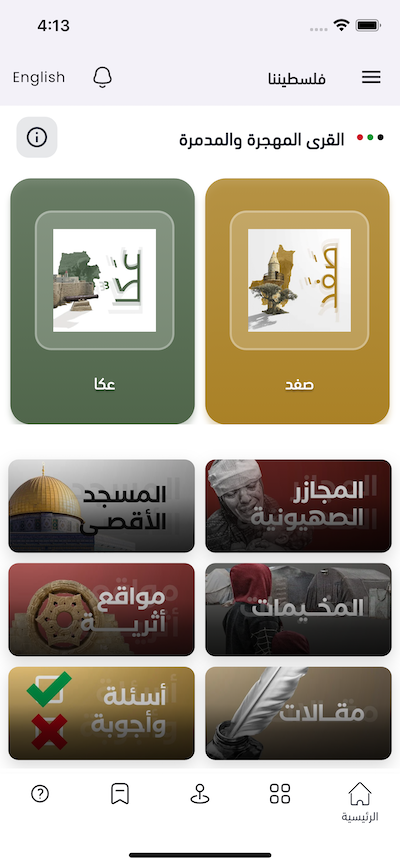
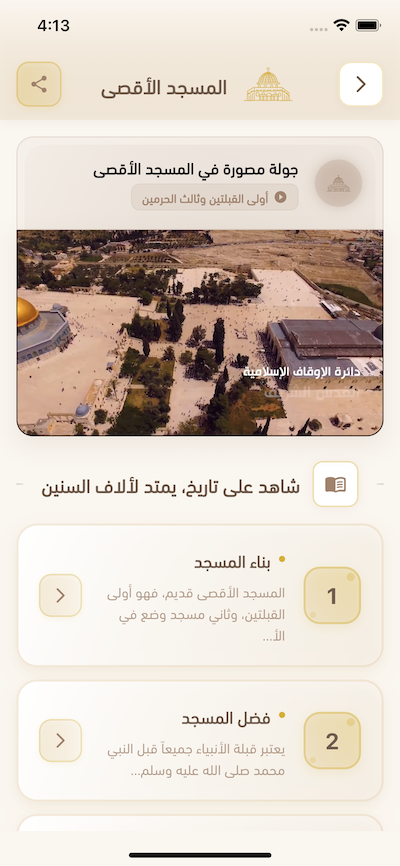
The whole archive in the palm of your hand: depopulated villages, the Nakba, the massacres and Al-Aqsa — free, with no ads to erase the story.
Download Our Palestine App
The whole archive in the palm of your hand: depopulated villages, the Nakba, the massacres and Al-Aqsa — free, with no ads to erase the story.
Comments
No comments yet — be the first to write one.
Add your comment
Name and email are optional. Comments appear after review.