The Origins of the Term “Zionism”
The emergence of the term “Zionism” cannot be understood solely through the religious meaning later attached to it. From a Palestinian historical perspective, modern political Zionism developed within the wider environment of nineteenth-century European nationalism, imperial expansion, and competition for influence in the Middle East, while drawing upon religious and historical symbolism to advance a modern political project.
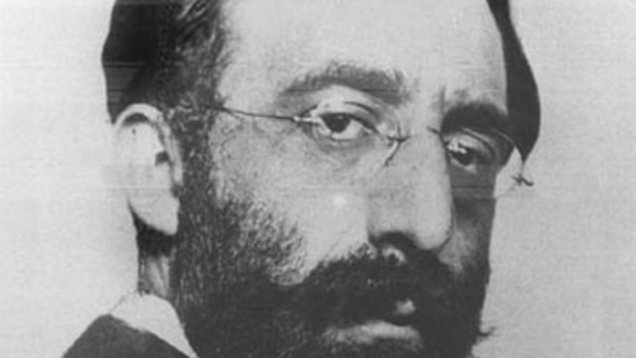
The term “Zionism” (Zionismus) was coined in Europe in 1890 by the Austrian Jewish writer Nathan Birnbaum, who used it to describe a Jewish nationalist movement oriented toward Palestine and the idea of a “return to Zion.”
The name itself derives from Zion, a biblical term associated with Jerusalem that acquired a broader religious and symbolic meaning in Jewish tradition, representing Jerusalem and, more widely, the Land of Israel.
By the end of the nineteenth century, however, this ancient religious symbolism was increasingly being transformed into an organized modern political program.
A decisive moment came with Theodor Herzl and the publication of his influential pamphlet Der Judenstaat (The Jewish State) in 1896. Herzl argued for the establishment of a territorially based Jewish state as a political response to antisemitism in Europe. His ideas helped propel Zionism from a collection of nationalist and settlement initiatives into a more organized international political movement.
From an Idea to a Political Project
From a Palestinian reading of this history, Palestine was not approached merely as a sacred or ancestral land. It also occupied a strategic position in a region dominated by European imperial interests.
As Zionism developed into an organized political movement, its objectives increasingly intersected with the policies of major Western powers.
This relationship became particularly significant during the First World War. On November 2, 1917, the British government issued the Balfour Declaration, publicly declaring its support for the establishment in Palestine of a “national home for the Jewish people.”
For Palestinians, the declaration represented a profound historical injustice: an imperial power was pledging support for a political project in a country already inhabited overwhelmingly by another people, without granting that population an equivalent political voice in determining the future of its own homeland.
From the Palestinian perspective, several features of the developing Zionist project became increasingly consequential:
- The growing political backing provided by Western powers, most notably Britain.
- The mobilization of biblical and historical claims in support of a modern territorial project in an already inhabited country.
- Narratives that minimized or obscured the presence of Palestine’s indigenous Arab population, including the influential image of Palestine as a land awaiting settlement.
- The development of institutions devoted to immigration, land acquisition, settlement, and the establishment of an increasingly separate Jewish national community in Palestine.
Over time, therefore, Zionism came to represent far more than an aspiration for Jewish national self-determination. In Palestinian historical experience, it became inseparable from a process of settler expansion, dispossession, and demographic transformation that directly affected the people already living on the land.
Zionism Through the Palestinian Experience
Palestinian scholarship and political thought have frequently understood Zionism as a form of settler colonialism: a movement whose realization in Palestine required not merely the creation of a new political community, but a profound transformation of the country's land, population, and national identity.
Within this interpretation, the central Palestinian objection to Zionism does not arise from Jewish religious attachment to Jerusalem or Palestine. Rather, it concerns the consequences of transforming that attachment into a territorial political project pursued in a land inhabited by another people.
For Palestinians, this process meant the progressive loss of land, the erosion of political control over their homeland, and ultimately mass displacement.
Under the banner of the “return to Zion,” decades of immigration, land settlement, institution-building, and political struggle culminated in the Nakba of 1948.
During the Nakba, hundreds of Palestinian villages and towns were depopulated, destroyed, or emptied of their inhabitants, and the majority of the Palestinian Arab population of the territory that became Israel was displaced from its homes.
The establishment of Israel in 1948 therefore occupies radically different places in the historical memories of the two peoples. While Zionist narratives commemorate it as the realization of Jewish national statehood, Palestinians remember the same historical transformation through the Nakba — the catastrophe of dispossession, forced displacement, refugeehood, and the destruction of hundreds of Palestinian communities.
For Palestinians, this is why the history of Zionism cannot be separated from the history of the land and people upon whom its political realization was imposed.
More from the archive



 Download Our Palestine App
The whole archive in the palm of your hand: depopulated villages, the Nakba, the massacres and Al-Aqsa — free, with no ads to erase the story.
Download Our Palestine App
The whole archive in the palm of your hand: depopulated villages, the Nakba, the massacres and Al-Aqsa — free, with no ads to erase the story.


Comments
No comments yet — be the first to write one.
Add your comment
Name and email are optional. Comments appear after review.